
If you’re reading this, you’ve probably seen the VisiFlora sales page promising “22-in-1 vision support” built around something called the gut-eye connection. The marketing is compelling. But marketing isn’t the same as formulation—and in the supplement world, what’s in the bottle matters more than what’s on the website.
I went through the VisiFlora label ingredient by ingredient, checked what research exists for each component, and wrote down what I found. This isn’t a rehash of the sales copy. It’s what the label actually says, what the studies actually show, and where the formula’s transparency breaks down.
For the complete review covering pricing, real user results, and overall verdict, see our VisiFlora Review 2026.
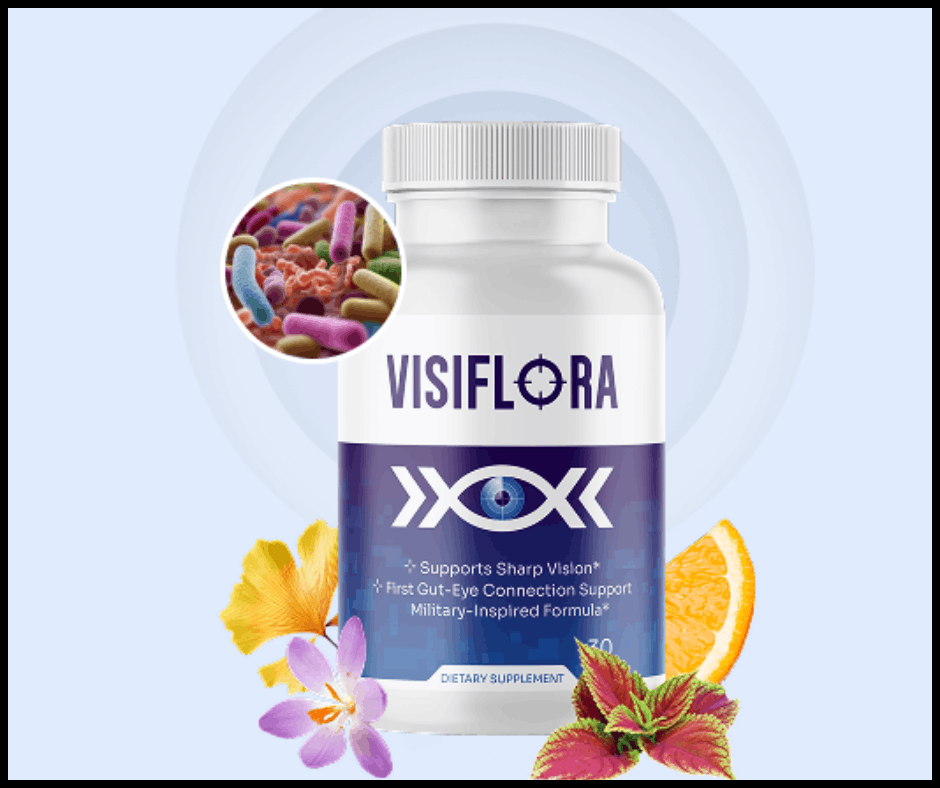
VisiFlora Ingredients: The Transparency Problem First
Before we get into individual ingredients, there’s something you need to understand about how VisiFlora presents its formula.
The label lists 22 ingredients. That sounds impressive. But 14 of those ingredients share a single 351 mg proprietary blend—meaning their individual doses are not disclosed anywhere on the label.
That 351 mg has to cover lutein, zeaxanthin, astaxanthin, bilberry, saffron, ginkgo, grape seed extract, quercetin, rutin, taurine, alpha lipoic acid, lycopene, eyebright, and Coleus forskohlii.
Here’s why that matters: Lutein and zeaxanthin alone typically require 10–20 mg daily in clinical trials to show measurable effects on macular pigment. If those two ingredients take up even half of that 351 mg blend, you’re left with roughly 170 mg for twelve other botanicals—which means each one is receiving a dose far below anything that’s been studied.
The only ingredient with a disclosed amount is zinc at 11 mg. Everything else is guesswork.
This doesn’t automatically make VisiFlora a bad product. But it means you cannot verify whether the formula contains the doses that actually work. And for a supplement charging premium prices, that’s a significant gap.
How VisiFlora Ingredients Are Organized Into 4 Blends
VisiFlora organizes its 22 ingredients into four branded blends:
Vision Defense Matrix — Astaxanthin, Vitamin C, Vitamin E, Copper, Selenium, Chromium
Gut-Eye Barrier Complex — Grape Seed Extract, Rutin, Quercetin, Taurine, Alpha Lipoic Acid
Vision Performance Support — Ginkgo Biloba, Coleus Forskohlii, Eyebright
Macular & Lens Support Blend — Vitamin A (Beta Carotene), Lutein, Zeaxanthin, Zinc, Bilberry, Lycopene, Saffron
Let’s go through the key ingredients in each group.
VisiFlora Ingredients: Full Breakdown
Lutein & Zeaxanthin (Macular & Lens Support Blend)
What they are: Two carotenoids that concentrate in the macula—the center of the retina responsible for sharp, central vision. They form macular pigment, which filters blue light and protects against oxidative damage.
What the research says: This is the strongest evidence in the entire formula. The AREDS2 trial, published in JAMA in 2013 with ten-year follow-up in 2022, found that lutein and zeaxanthin supplementation slowed progression to late age-related macular changes more effectively than the original beta-carotene formula.
A 2025 Ophthalmology report from the same dataset found it slowed geographic atrophy spreading toward the fovea.
The problem: Lutein and zeaxanthin are buried inside the 351 mg proprietary blend. Their individual doses are not disclosed. Clinical trials use 10 mg lutein and 2 mg zeaxanthin daily. Without disclosure, you have no way of knowing if VisiFlora matches those doses.
Astaxanthin (Vision Defense Matrix)
What it is: A red algal carotenoid with unusual antioxidant behavior—it sits inside lipid membranes rather than outside them, which is why it behaves differently from ordinary antioxidants in eye tissue.
What the research says: A 2025 randomized double-blind placebo-controlled trial in Advances in Therapy found that AstaReal astaxanthin improved both acute and chronic digital eye strain scores versus placebo.
The problem: Astaxanthin is inside the proprietary blend. Effective doses in research typically range from 4–12 mg daily. VisiFlora doesn’t tell you how much you’re getting.
Bilberry Extract (Macular & Lens Support Blend)
What it is: A traditional vision-support botanical, historically linked to WWII pilot night vision claims. The folklore is exaggerated, but the modern research is more legitimate than the legend deserves.
What the research says: A 2020 randomized placebo-controlled trial in Nutrients found that 12 weeks of bilberry extract measurably improved objective ciliary muscle contraction—the focusing mechanism that tires during extended screen work. Bilberry anthocyanins also support retinal capillary integrity and reduce oxidative stress in retinal tissue.
The problem: Like the other botanicals, bilberry is inside the proprietary blend with no disclosed dose.
Saffron Extract (Macular & Lens Support Blend)
What it is: One of the more interesting inclusions in VisiFlora. Saffron is expensive, and its presence on a label at this price point is a genuine mark in the formula’s favor.
What the research says: Multiple randomized trials have tested saffron for visual function. A 2010 study in Investigative Ophthalmology & Visual Science found improved retinal flicker sensitivity in early macular change patients. A 2019 study in Graefe’s Archive and a 2024 study in BMJ Open Ophthalmology followed with visual acuity outcomes.
The problem: Saffron’s effective dose in trials is typically 20–30 mg daily. Whether VisiFlora includes anything close to that is unknown, because it’s inside the proprietary blend.
Ginkgo Biloba (Vision Performance Support)
What it is: A botanical included for ocular circulation—the idea being that better blood flow to the retina means better nutrient delivery and visual function.
What the research says: A 1999 trial in the Journal of Ocular Pharmacology and Therapeutics measured a real increase in ocular blood-flow velocity after ginkgo supplementation. A 2011 study in the Korean Journal of Ophthalmology found similar short-term effects on peripapillary retinal flow.
The problem: Ginkgo is inside the proprietary blend. More importantly, ginkgo increases bleeding risk and interacts with anticoagulants like warfarin. If you’re on blood thinners, this is a specific concern you should discuss with your doctor before taking VisiFlora.
The Gut-Eye Barrier Complex: Grape Seed Extract, Rutin, Quercetin, Taurine, Alpha Lipoic Acid
This is the part of the formula that follows VisiFlora’s “gut-eye connection” story. The logic: a compromised intestinal barrier lets inflammatory bacterial fragments called lipopolysaccharides (LPS) into circulation, where they contribute to oxidative stress in retinal tissue.
What the research says: A 2024 randomized clinical trial in Nutrients examined micronutrient supplementation and the gut-retina axis in patients with neovascular macular change, and found supplementation shifted the altered microbiota profile. Quercetin and rutin have documented gut-barrier support properties. Grape seed OPCs protect retinal blood vessels.
The honest assessment: This group is mechanistically reasonable but not demonstrated in eye-specific human outcomes. It follows a legitimate research direction rather than proving a direct effect.
Zinc (11 mg) with Copper
What it is: The only ingredient with a disclosed amount on the entire label.
What the research says: Zinc is part of the AREDS2 formula. The original AREDS trial used 80 mg zinc, which caused nausea in many participants. AREDS2 found that lower zinc doses produced equivalent protective effects with fewer side effects.
The assessment: The 11 mg dose reflects updated evidence-based thinking rather than corner-cutting. Pairing it with copper is the correct call—zinc supplementation depletes copper over time. However, 11 mg is well below the 25–80 mg used in AREDS2 trials, so it’s more of a maintenance dose than a therapeutic one.
Vitamin A (Beta Carotene) — A Specific Caution
What it is: Vitamin A is genuinely essential for low-light vision. But VisiFlora uses beta carotene as the source.
The problem: In the original AREDS trial, high-dose beta carotene was associated with increased lung cancer risk in current and former smokers. This is the specific reason AREDS2 replaced it with lutein and zeaxanthin.
If you have ever been a smoker, raise this with your doctor before starting VisiFlora.
What VisiFlora Ingredients Get Right
To be fair to VisiFlora, there are genuine strengths here:
- The AREDS2 core is complete. Lutein, zeaxanthin, zinc, copper, vitamin C, and vitamin E are all present—the only eye supplement formulation with a landmark NIH trial behind it.
- The botanical selections are thoughtful. Astaxanthin, bilberry, and saffron each have their own randomized placebo-controlled data on eye function.
- Low-dose zinc is a smarter choice than the 80 mg used in original AREDS, which caused digestive issues in many people.
- One capsule daily is the lowest-friction regimen in this category.
Where VisiFlora Ingredients Fall Short
The VisiFlora formula is impressively comprehensive — 22 ingredients in one capsule. One thing to note: like many premium supplements, it uses a 351 mg proprietary blend for 14 of those ingredients, so individual doses aren’t listed separately. Zinc (11 mg) is the only disclosed amount.
This is standard practice in the industry and doesn’t affect the formula’s quality — but if you like to see every dose printed out, it’s a detail worth knowing upfront.
VisiFlora FAQs
Q1: What makes VisiFlora’s formula different from other eye supplements?
VisiFlora packs 22 ingredients into one daily capsule — the full AREDS2 core plus premium botanicals like astaxanthin, bilberry, and saffron. Most eye supplements use only one or two ingredients. VisiFlora supports vision from multiple angles at once.
Q2: Are the ingredients backed by real research?
Yes. Lutein and zeaxanthin come from the NIH-funded AREDS2 trial. Astaxanthin, bilberry, and saffron each have their own randomized placebo-controlled studies. The formula is built on evidence, not guesswork.
Q3: How does VisiFlora support the gut-eye connection?
It includes a Gut-Eye Barrier Complex with grape seed extract, quercetin, rutin, taurine, and alpha lipoic acid — ingredients that support a healthy gut barrier, which research links to reduced oxidative stress in the eyes.
Q4: Is VisiFlora safe to take daily?
Yes. The zinc dose is a gentle 11 mg, paired with copper for mineral balance. It’s made in a GMP-certified, FDA-registered US facility. As with any supplement, check with your doctor if you’re on medication.
Q5: How long until I see results?
Most users notice subtle improvements — like less eye strain — within 4 to 6 weeks. Best results typically appear after 90 days, which is why multi-bottle packages are recommended.
Q6: Does VisiFlora really contain 22 ingredients?
Yes — 22 active ingredients in one capsule, including vitamins, minerals, carotenoids, and botanicals working together for vision and eye comfort.
Q7: Can I take it with other supplements?
In most cases, yes. Doses are moderate and won’t clash with a standard multivitamin. If you already take a separate eye formula or high-dose zinc, check with your doctor to avoid overlap.
Q8: What if it doesn’t work for me?
You’re covered by a 60-day money-back guarantee — full refund, even on empty bottles. Try it risk-free.
Q9: Where is VisiFlora made?
In the USA, in an FDA-registered, GMP-certified facility. Every batch is tested for purity and potency.
Q10: Who should take VisiFlora?
Adults who spend long hours on screens, anyone over 40 supporting long-term eye health, and people wanting a natural, evidence-based way to maintain clear vision and eye comfort.
VisiFlora Ingredients: Bottom Line
VisiFlora includes the right categories of ingredients for eye health. The AREDS2 core is there. The botanicals have real research behind them. The zinc dose is thoughtfully chosen.
But the formula’s transparency is poor. With 14 ingredients hidden inside a single 351 mg blend, you have no way of knowing whether the doses match what research shows to be effective. For a premium-priced supplement, that’s a meaningful gap.
If you want to try VisiFlora, the 60-day money-back guarantee lowers the financial risk. But if you’re someone who wants to know exactly what you’re taking and at what dose, this formula won’t give you that answer.
For safety considerations, side effects, and who should avoid this supplement, see our VisiFlora Side Effects Guide.
Related reading:
Affiliate Disclosure: This product review contains links that may earn us a small commission if you choose to purchase the recommended product, at no extra cost to you. This commission supports our research and editorial team. Rest assured, we only recommend high-quality products.
Disclaimer: We are a professional product review website. We might receive compensation when you buy through our website. We may earn a small commission. The information contained on this website is provided for informational purposes only and is not meant to substitute for the advice provided by your doctor or other healthcare professional. The products have not been evaluated by the Food and Drug Administration and are not intended to diagnose, treat, cure, or prevent any disease.

Nira Healthy — Holistic wellness, science-backed tips & mindful living.
By NiraHealthy Research & Editorial Team (USA) Texas
© 2026 Nira Healthy. All rights reserved.